Roof dryer vent cleaning in Gilbert
Included in the $99. Not an upcharge, not a reason to turn the job down, and not something we discover at your door and renegotiate.
Calls answered 7am to 8pm · same-day service usually available
Laundry room upstairs? It almost certainly vents through the roof. Still $99.

Why so many Gilbert homes vent through the roof
Because the laundry room is upstairs. Once builders moved washers and dryers to the second floor, which became standard in Gilbert plans from the late nineties onward, the vent had nowhere sensible to go but up and out through the roof.
The alternative would be routing the duct back down through the house and out a first-floor wall, which means a longer path with more turns. The roof won. The result is a vent climbing a wall cavity, turning at the ceiling or in the attic, and terminating in a hooded cap on your roof.
The code math, and why it matters to you
This is the part most homeowners have never been told, and it explains a great deal.
The International Residential Code caps a dryer exhaust run at 35 feet of equivalent length. Every 90-degree elbow deducts 5 feet from that allowance, and every 45-degree elbow deducts 2.5. So a run with two 90s has an effective maximum straight run of 25 feet. Three 90s puts you at 20.
A typical Gilbert roof run is 25 to 35 feet of actual pipe with two or three elbows in it. Do that arithmetic and a lot of these runs are at or past the code allowance as originally built.
That is not a scandal and it is not the builder cheating. Manufacturers and code officials both allow for it. But it does mean your run has close to zero margin. A quarter inch of lint on the walls of a duct that was already at the limit is the difference between a dryer that works and one that does not.
Duct length limits per the International Residential Code, Section M1502.4. Requirements vary by municipality, so confirm local code before modifying any duct run.
Why roof runs clog faster
Length
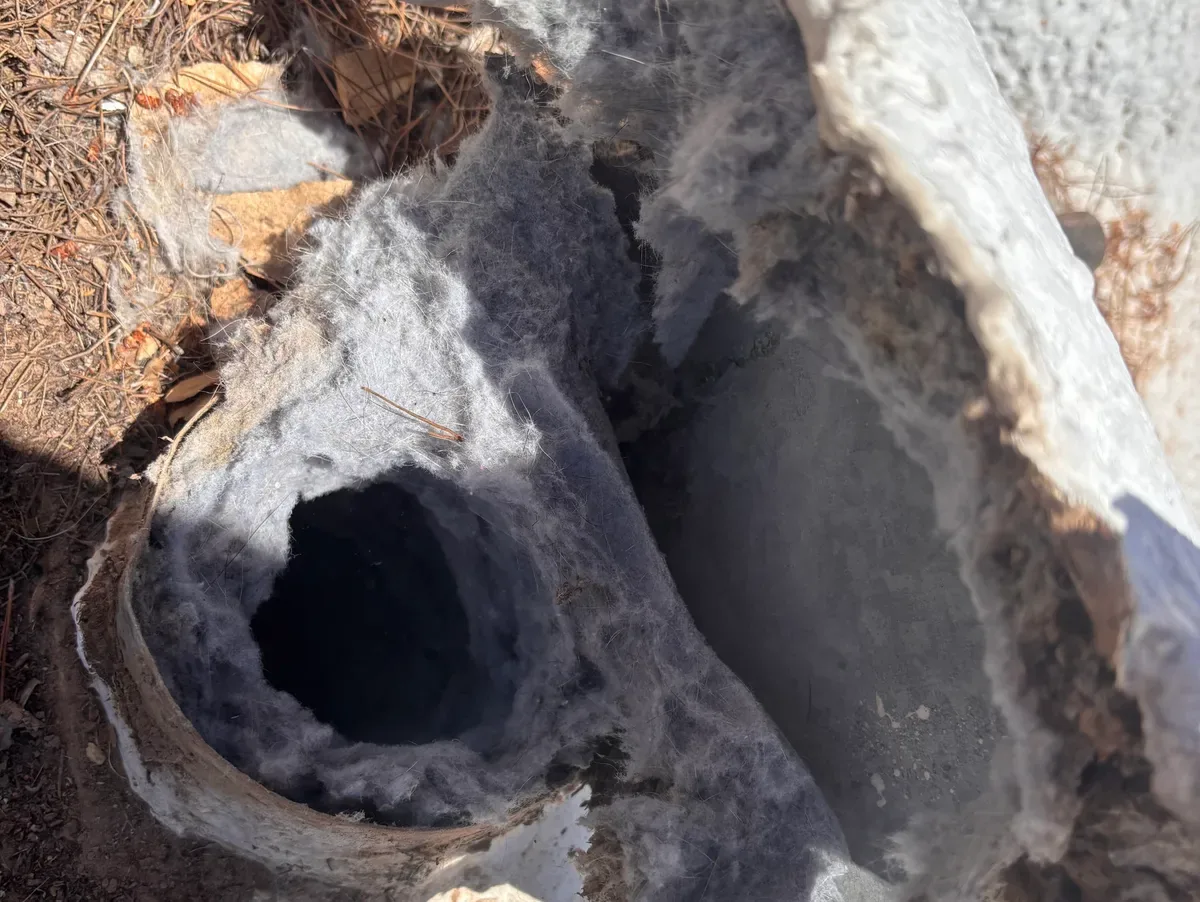
More duct means more interior surface for lint to catch on. A thirty-foot run has roughly four times the surface of an eight-foot one.
Elbows
Air slows at every turn and slow air drops its lint. Each elbow becomes a collection point, and once a little lint sits there it narrows the passage, which slows the air further, which collects more. It accelerates.
Gravity
The one people do not think about. In a horizontal side-wall run, lint that does not make it out sits where it lands. In a vertical roof run it falls back down and stacks at the bottom, at the first elbow, or right behind the dryer. The run works against itself on every load.
Why some companies avoid this work
Because it is harder and riskier, and the easy money is single-story side-wall vents you reach from the ground. A roof job means a ladder, a two-story climb, and walking concrete tile in Arizona heat without cracking anything.
Before you book anyone for a two-story Gilbert home, ask one question: is roof access included in that price?
How we clean a roof-terminated vent
- Check the cap first. From the roof, before anything else. Nest, flapper stuck open or seized shut, cracked hood, or a screen a previous owner installed with good intentions.
- Brush from the top down. The rotary brush gets fed down from the cap, using gravity instead of fighting it, and putting the brush where the worst buildup usually sits.
- Then work it from the dryer end. Machine unplugged and pulled back, brush fed up into the run, and everything it frees brought down and vacuumed up out of the wall.
- Reconnect, test, show you. The pile out of a thirty-foot roof run is usually worth seeing.
About walking your roof
We have been doing this long enough to know how to move on a tile roof, and where the structural points are so nothing cracks under weight. Concrete tile is unforgiving about that, and a cracked tile turns into a leak the next time the monsoon actually delivers.
If a roof is not safe to walk, we do not walk it. Bad pitch, heat-damaged or already-broken tile, whatever the reason. In that case we clean the run from the interior only and tell you plainly that is what we did. Gambling with your roof to save ourselves time is not a trade we are willing to make.
Worth fixing while we are up there
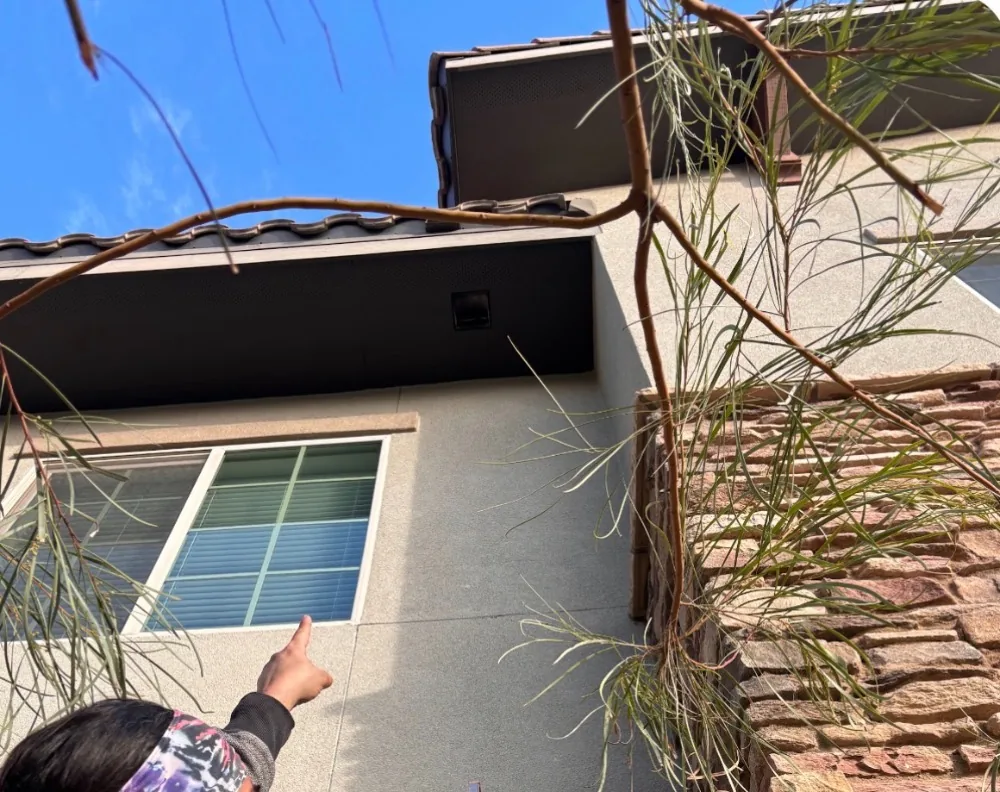
- A flapper rusted or lint-jammed open, which is an open invitation to birds
- A missing or cracked hood letting rain straight into the duct
- No bird guard on an otherwise sound cap
- A cap screened over by a previous owner, which the code actually prohibits because lint clogs screens fast
- A cap never properly sealed to the roof
We are not a roofing company and will not pretend to be. But we are up there anyway, and telling you what we see costs nothing.
Roof vent questions
Do you charge extra for roof dryer vents in Gilbert?
No. Roof terminations are included in the $99 flat price. In Gilbert the roof vent is the normal case for two-story homes rather than an exception worth surcharging, and charging extra for normal is a strange way to run a business.
Will you walk on my tile roof?
Yes, and we know where to step. Concrete tile cracks if you put weight in the wrong place, so we work off the structural points. If a roof is genuinely unsafe to walk, because of pitch, heat damage or existing broken tile, we will say so and work the run from inside instead rather than gamble with your roof to save ourselves time.
Can a roof vent be cleaned from inside only?
On a short run, sometimes. But roof runs usually have two or three elbows, and reaching the cap matters because that is where nests and the heaviest buildup sit. We prefer to work both ends, which is also why these jobs take longer than a side-wall vent.
How do I know if my vent goes out the roof?
If your laundry room is upstairs and there is no vent flap on an exterior wall near it, it goes out the roof. Look for a small hooded cap on the roof above the laundry side of the house. If you are in Power Ranch, Seville, Adora Trails or most of the two-story stock built after about 1998, assume yes.
Is there a limit on how long a dryer run can be?
Yes. The International Residential Code sets a maximum equivalent length of 35 feet, and it deducts 5 feet for each 90-degree elbow and 2.5 feet for each 45. A run with three 90-degree elbows has an effective allowance of about 20 feet. Plenty of Gilbert roof runs are at or past that line as originally built, which is why they have so little tolerance for lint.
What if my roof cap is damaged?
We will tell you and show you. A cracked hood or a flapper stuck open is how birds and rain get in, and it is much easier to deal with while we are already up there than as a separate trip later.
Calls answered 7am to 8pm · same-day service usually available
$99 flat, same as any other vent in Gilbert.